


 |
 |
General
AOPA (UK) Radio Navigation Certificate course is designed to encourage pilots who hold either a PPL or a UK NPPL to obtain formal training in radio navigation procedures for use under Visual Flight Rules in accordance with the privileges of their licence
Pre-Course Entry Requirements
Hold a PPL or UK NPPL with a valid class rating, Flight Radiotelephony Operators Licence (FRTOL) and medical certififcate
Ground Training
The training consists of a minimum of 10 hours of ground tuition taken from the UK IMC Rating ground training syllabus. The training shall be integrated with the flight training so that the maximum benefit is gained from time spent in the air
Flight Training
The training consists of a minimum of 5 hours dual flight training of which 1 hour may be conducted in a FNPT or flight simulator approved by the UK CAA. The flight training will be conducted by an instructor who holds a UK CAA issued IRI(A) or FI(A) with FCL.905.FI(h) or FCL.905.FI(h(IRR)) privileges
Radio Navigation Certificate Test
On satisfactory completion of the flight and ground training the candidate must pass a Radio Navigation Certificate test with an FE.. The test shall include:
(a) A VFR dead reckoning navigation leg of not less than 25 nm using any VOR, DME, ADF or VDF for fixing backed up by map reading; GPS may be used to confirm fixes. Direct tracking to/from navigation beacons will not be allowed
(b) A diversion leg of at least 20 nm must then be flown using only radio aids for navigation except for visual identification of the final destination GPS may be used as the main aid but must be backed by at least one fix using other radio navigation aids
The following sections shall be examined:
Before Flight
Flight planning
Prior to Take-Off
Rad/Nav equipment serviceability checks
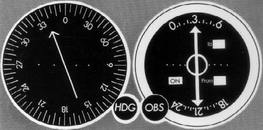
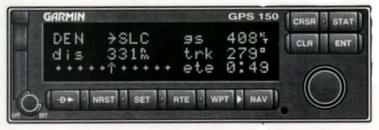
Setting up navaids for use - frequencies, radials, etc (use of GPS is mandatory)
Departure clearance
In Flight
Aerodrome departure procedures
RTF-ATC liason/frequency changes
En-Route
D/R naviagtion - revision of heading and ETA
Station selection and identification
Obtaining a fix
Maintenance of altitude/flight level
Altitude and position reporting
Intercepting a radial/magnetic bearing
Maintenance of radial/magnetic bearing - tracking
Use of aids to obtain ETA's
Identification of station passage
Use of GPS as a supplemental navigation aid
Use of radar facilities
In-flight decisions
Organisation of cockpit workload
General airmanship
Arrival procedures
References
Aeroplane Flight Manual for radio naviagtion equipment
CAA Safety Sense Leaflet 25 - Use of GPS
AOPA Training Manual - Instrument Flying, Radio Navigation and Instrument Approach Procedures
Instructor Manual (Part FCL edition)
UK AIP
SERA
ATC Regulations
Air Navigation Order
Credits
For holders of a PPL issued by the UK CAA, the course of training can be taken as a progressive step towards obtaining a UK IMC Rating. To this end a PPL holder who has qualified for the AOPA (UK) Radio Navigation Certificate may be exempt from up to 5 hours instrument training at the Applied Stage of the UK IMC Rating course (without time limit)
Validity
There is no validity period
Revalidation / Renewal Requirements
There are no revaildation or renewal requirements
