


 |
Cessna 152 work horse of most flying clubs |
 |
Spinning and aerobatics in a Robin 2160i |
PA28 Warriors are also flying club favourites for training |
 |
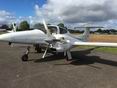
Multi-engine flying in the DA42 Twin Star |
 |
General
FIE training courses are available for the UK CAA and Danish CAA [Trafikstyrelsen] licence holders including FCL.900(c) certificate holders. Other licence holders must contact their National Aviation Authority (NAA) to ensure they will accept this training course before booking
The assessment of competence is conducted by a UK CAA FOTI/senior examiner or Danish CAA [Trafikstyrelsen] Inspector/senior examiner as applicable at a mutually acceptable location
All applicants considering becoming an FIE shall apply to the UK CAA or Danish CAA [Trafikstyrelsen] in the first instance. If the applicant's qualifications meet the Part FCL requirements then they will receive notification enabling them to complete the FIE course
The applicant's ability will be assessed throughout the training course prior to taking the assessment of competence
Aims
The aims of FIE course are:
(a) To ensure that the candidate has the skill and potential to become a FIE on SE aeroplanes
(b) To describe the FIE requirements, responsibilities and revalidation requirements
(c) To explain the principles of standard examiner techniques
(d) To add ME privileges (if applicable)
(e) To add Seaplane privileges (if applicable)
Objectives
The applicant must be able to:
(a) Demonstrate a pre-flight and post flight briefing to include facilitative skills
(b) Demonstrate how to conduct a flight test and ground examination
(c) State the privileges of the FIE and the revalidation and renewal requirements
(d) Describe instructor revalidation and renewal requirements
(e) Explain the how to complete the flight test documentation and administration
(f) Correctly assess the applicant's performance including technical and non-technical skills
Pre-Entry Requirements
(a) hold the relevant instructor certificate, as applicable to the examiner certificate sought
(b) have completed 2000 hours of flight time as pilot of aeroplanes or TMG
(c) have at least 100 hours of flight time instructing applicants for an instructor certificate
In addition, the following material should be studied prior to starting the course:
Part FCL, ARA and ORA including the associated AMC and GM
UK CAA and/or EASA Flight Examiner Manual
UK CAA Standards Documents 10, 21
UK CAP 804
SERA
UK CAA - Information Notice, Skywise, AIC
Danish CAA [Trafikstyrelsen] - examiner.dk web page
Training
Complete a training course at an ATO. The following course durations are a guide only and are dependent on your personal pre-course preparation
FIE course SE privileges - 4 days
FIE course SE and ME privileges - 5 days
To add privileges to an FIE:
ME - 2 days
Seaplane - 2 days
Examiner Core Knowledge
Part FCL.1015 Course requirements and course program
Examiner Certificates, Privileges and Conditions
Part-FCL Subpart K
UK CAA Flight Examiner Handbook (FEH) or/and EASA Flight Examiner Manual (FEM)
UK CAA and/or Danish CAA [Trafikstyrelsen] National Requirements/Part NCO/SERA
UK CAA Air Navigation Order (ANO)
Part NCO
SERA.5005 and 5015
UK CAA
ORS 4 Exemptions
Examiner Standardisation
Part FCL AMC2 FCL.1015
UK CAA Standards Documents (as appropriate)
Examiner Common Errors
Assessment and Debriefing
Part FCL AMC2 FCL 1010
Fundamentals of Assessment Errors
Use of Facilitation in Debriefs
Threat and Error Management
Testing Emergency and Abnormal Procedures
Safety Tips/Hazards
Flight Test Documentation and Administration
Flight Test Booking
Test/UK CAA Fees/Danish CAA [Trafikstyrelsen] Fees
Liability
Data Protection
UK CAA CAP 793 Use of Unlicensed Airfields for testing
UK CAA Documents
Danish CAA [Trafikstyrelsen] - examiner.dk web page
FIE Theoretical Knowledge
Health and Safety Briefing
Plan for the course
Course study materials
Course pre-requisites and candidate documentation validation
Examiner authorisations and requirements
# Appointments
# Validity
# Standardisation
# Who may test whom?
# Authorisation restrictions
Basic examining techniques and the role of the examiner
UK CAA Flight Examiner Handbook
EASA Flight Examiner Manual
Danish CAA [Trafikstyrelsen] - examiner.dk web page
UK CAA Standards Documents 10, 21
UK CAA CAP 393 ANO
Part FCL, ORA and ARA including associated AMC, GM and Appendices
UK CAA - Information Notice, Skywise
Review of examiner core knowledge (Quiz)
Discussion and standardisation of PPL / LAPL exercises including variations in technique and content
Demonstration of pre-flight briefing techniques by applicant
# Applicant gives pre-flight briefing of a PPL / LAPL exercise
# Discussion to include technique, content, presentation
Tutor gives pre-flight briefing of a PPL / LAPL exercise
# Discussion to include technique, content, presentation
Discussion and standardisation of instructional technique
Instructor facilitates discussion on remaining PPL / LAPL exercises with applicant
# What is taught - exercise make up (good and poor)
# Why it is taught
# How it is taught - methods and practices (good and poor)
# Techniques - correct and non-standard/incorrect
# Key words and phrases
# Building blocks - known to unknown
# Airborne instruction - Demonstrate, Teach, Practice, Critique
Flight test documentation and administration
# Flight crew licence - checking and making entries
# Pilot logbook - checking and recording of flight time
# Medical certificate
# Identification
# Approved course completion certificates
# Instructor certificate test/check report forms and examiner’s record
# Notification of failure form
# Insurance
# Personal data protection
# Appeals against conduct of flight tests
# Second or subsequent series failure report form
FI assessment of competence
# Purpose of test
# Test schedule, profile and format - plan for the test
# Test standard
# UK CAA Safety Module (Weather Appreciation, Flight in Poor Visibility, Calculation and Application of Safety Altitude, Stall Spin Awareness, Navigation Techniques)
Examiner briefing format and techniques
# Initial briefing of candidate
# Pre-flight briefing
# Air exercises - primary and secondary
# Long briefing / ground lesson
# Theoretical knowledge oral examination
Sample briefings by tutor
Practice briefings by FIE applicant - review
Oral examination ground school subjects
# Oral questioning technique
# Simple open question; further probing questions for depth of knowledge
# Avoid closed (yes/no) questions
# Use what; why; where; how
# Answer questions - correctly and incorrectly
# Appropriate subject matter
# Expected breadth and depth of knowledge
Examiner role and technique
# Role playing - not trickster - relaxed but professional
# Average student - not leading
# Question - items glossed over/not explained; incorrect techniques/theory; be logical
# Receptive - do as your asked and not what you think/know
# Making mistakes - subtle; obvious; what to do if not corrected
# Open mind - don’t be closed to new ideas/techniques; consider - did it achieve the aim?
# Allow the exercise to flow; relax; let the applicant run the exercise at their pace
# Be concise and clear when stating the next exercise to be taught
# Be safe
# Definition of terms - Demonstrate, Teach, Patter, etc
Assessment
# Instructor competencies (FCL.920)
# In flight recording
# Termination of flight test
# Repeat manoeuvres
# Partial pass
# Incomplete tests
# Personal flying ability
# Appeals against conduct of flight tests (Regulation 6)
Actions after flight
# Assessing performance against requirements
# Identifying, assessing and debriefing CRM and TEM
# De-briefing techniques, technical errors, non-technical errors, facilitation
# Failure of test - privileges affected
# Re-test requirements
# Re-training - recommended versus mandatory
# Completion of test report form and licence / log book entries
# Statistical records
Sample de-briefing by tutor
Practice de-briefing by FIE applicant - review
Practice assessment of competence - applicant acting as examiner
# FI initial
Conduct of other instructor tests
# FIC instructor
# FIC instructor addition of Seaplane privileges (as applicable)
# FI addition of Seaplane privileges (as applicable)
# CRI SE
# CRI SE Seaplane (if applicable)
# IRI
# Revalidation and renewal
Review each test above in terms of:
# Purpose of test
# Test schedule, profile and format - plan for the test
# Test standard
Conduct of non-Part FCL tests and checks
Conduct of EASA tests and checks
# FCL.1000(c)
# Examiners Differences Document
Practice assessment of competence – applicant acting as examiner
# Addition of IRI privileges to FI certificate
Arrangements for the conduct of tests
# Booking and arranging tests
# Use of aeroplanes - equipment, documents, maintenance, serving, insurance, DFT approval
# Use of aerodromes - licence and unlicensed
# Planning and briefing facilities
# Test fees
# Delays, rescheduling, rebooking
Review of training course
Briefing on the format of the FIE assessment of competence - SE privileges
# Role of applicant and UK CAA FOTI or senior examiner
# Role of applicant and Danish CAA [Trafikstyrelsen] Inspector or senior examiner
Addition of ME privileges
Introduction and plan for course
Discussion and standardisation of flying exercises 22 and 23 including variations in technique and content
Demonstration of pre-flight briefing techniques by applicant
# Applicant gives pre-flight briefing of an exercise (22-23)
# Discussion to include technique, content, presentation
Tutor gives pre-flight briefing of an exercise (22-23)
# Discussion to include technique, content, presentation
Discussion and standardisation of instructional technique
# What is taught - exercise make up (good and poor)
# Why it is taught
# How it is taught - methods and practices (good and poor)
# Techniques - correct and non-standard/incorrect
# Key words and phrases
# Building blocks - known to unknown
# Airborne instruction - Demonstrate, Teach, Practice, Critique
ME examining techniques in the air
# Engine failures
CRI ME assessment of competence
# Purpose of test
# Test schedule, profile and format - plan for the test
# Test standard
# UK CAA Safety Module (Weather Appreciation, Flight in Poor Visibility, Calculation and Application of Safety Altitude, Stall Spin Awareness, Navigation Techniques)
Conduct of other ME instructor tests
# Addition of ME instructional privileges to FI
# Addition of ME instructional privileges to FIC instructor certificate
# Combined CRI and IRI on a ME aeroplane
Review each test above in terms of:
# Purpose of test
# Test schedule, profile and format - plan for the test
# Test standard
Flight test documentation and administration for ME instructor tests
Practice assessment of competence – applicant acting as examiner
# CRI ME
# Addition of ME privileges to FI certificate
Review of training course
Briefing on the format of the FIE assessment of competence - ME privileges
# Role of applicant and UK CAA FOTI or senior examiner
# Role of applicant and Danish CAA [Trafikstyrelsen] Inspector or senior examiner
Addition of Seaplane privileges
Introduction and plan for course
Discussion and standardisation of seaplane flying exercises including variations in technique and content
Demonstration of pre-flight briefing techniques by applicant
# Applicant gives pre-flight briefing of a seaplane exercise
# Discussion to include technique, content, presentation
Tutor gives pre-flight briefing of a seaplane exercise
# Discussion to include technique, content, presentation
Discussion and standardisation of instructional technique
# What is taught - exercise make up (good and poor)
# Why it is taught
# How it is taught - methods and practices (good and poor)
# Techniques - correct and non-standard/incorrect
# Key words and phrases
# Building blocks - known to unknown
# Airborne instruction - Demonstrate, Teach, Practice, Critique
Seaplane examining techniques on the water
# Engine failures
Seaplane instructor assessment of competence
# Purpose of test
# Test schedule, profile and format - plan for the test
# Test standard
# UK CAA Safety Module (Weather Appreciation, Flight in Poor Visibility, Calculation and Application of Safety Altitude, Stall Spin Awareness, Navigation Techniques)
Conduct of other seaplane instructor tests
# Addition of seaplane instructional privileges to FI
# Addition of seaplane instructional privileges to FIC instructor certificate
# Addition of seaplane instructional privileges to CRI
Review each test above in terms of:
# Purpose of test
# Test schedule, profile and format - plan for the test
# Test standard
Flight test documentation and administration for seaplane instructor tests
Practice assessment of competence – applicant acting as examiner
# CRI SE Seaplane
# Addition of seaplane privileges to FI certificate
Review of training course
Briefing on the format of the FIE assessment of competence - seaplane privileges
# Role of applicant and CAA FOTI or senior examiner
# Role of applicant and Danish CAA [Trafikstyrelsen] Inspector or senior examiner
Flight Training
Flight Instructor (FI) Assessment of Competence profile - SE (see note 1)
Class Rating Instructor (CRI) Assessment of Competence profile - SE or ME (see note 2)
Addition of ME privileges:
# Class Rating Instructor (CRI) Assessment of Competence profile - ME
Addition of Seaplane privileges:
# Class Rating Instructor (CRI) Assessment of Competence - Seaplane
Notes:
1. UK CAA requires the Assessment of Competence to include an assessment of teaching spinning on initial issue of the Flight Instructor certificate
2. FIE SE and ME training course will include an FI SE assessment and a CRI ME assessment
FIE Assessment of Competence
On successful completion of the training a recommendation will be made for the applicant to complete the assessment of competence. This must be carried out within 6 months of completion of the training. Failure to do so will result in the need for extra training
.
The applicant will be required to conduct an initial FI assessment of competence with the UK CAA FOTI, Danish CAA [Trafikstyrelsen] Inspector or senior examiner (as applicable) acting as the applicant
Applicants wishing SE and ME privileges may be required to conduct two tests; one will be an initial FI and the other a ME instructor test.
UK Instructor Assessment of Competence
The assessment of competence schedule is given below
Section 1 Theoretical Knowledge Oral (See note 1)
#Long briefing / lesson title
#Air law
Aircraft general knowledge
Flight performance and planning
Human performance and limitations
Meteorology
Navigation
Operational procedures
Principles of flight
Training administration
Section 2 Pre-Flight Briefing
Visual presentation and content
Technical accuracy
Clarity of explanation
Clarity of speech
Instructional technique including TEM/CRM
Use of models and aids
Student participation
Section 3 Flight
Arrangement of demonstration
Synchronisation of speech with demonstration
Assessment and correction of student faults
Aircraft handling
Instructional technique
General airmanship and safety
Positioning and use of airspace
Risk assessment including TEM/CRM
Section 4 Mandatory Exercises and other Exercises at Examiner's discretion
Spin avoidance (SE aeroplane)
Safety module
(See note 2)
Take-off and climb, engine failure after take-off (SE aeroplane)
Approach, landing, missed approach
Forced landing without power (SE aeroplane)
Additional exercises title and number
Section 5 ME (Aeroplane) Exercises (See note 3)
Engine failure (simulated) after take-off or on go-around
Asymmetric approach and go around
Asymmetric approach and landing
Section 6 Instrument Exercises
Basic instrument flight
Applied instrument flight
Instrument approach
Limited panel and unusual attitudes
Section 7 Post-Flight De-Briefing
Visual presentation and content
Technical accuracy
Clarity of explanation
Clarity of speech
Instructional technique and facilitation
Use of models and aids
Student participation
Notes:
1. This section is divided into two parts:
# The applicant is required to give a lesson under test conditions to other student(s), one of whom will be the examiner. The test lesson is to be selected from items of section 1. The amount of time for preparation of the test lesson is agreed upon beforehand with the examiner. Appropriate literature may be used by the applicant. The test lesson should not exceed 45 minutes
# The applicant is tested orally by the examiner for knowledge of items of section 1 and the core instructor competencies as given in the instructor course
2. The safety module is to comprise one or more exercise(s) from the following topics: weather appreciation, flight in poor visibility, calculation and appreciation of safety altitude, stall/spin awareness and navigation techniques
3. This section comprises additional exercises covering ME instructional privileges and is completed in a ME aircraft or FFS or FNPT II simulating a ME aircraft. This section, if applicable, is done in addition to sections 2, 3, 4, 6 and 7
EASA Instructor Assessment of Competence
The assessment of competence schedule is given below
Section 1 Theoretical Knowledge Oral (See note 1)
#Long briefing / lesson title
#Air law
Aircraft general knowledge
Flight performance and planning
Human performance and limitations
Meteorology
Navigation
Operational procedures
Principles of flight
Training administration
Section 2 Pre-Flight Briefing
Visual presentation
Technical accuracy
Clarity of explanation
Clarity of speech
Instructional technique
Use of models and aids
Student participation
Section 3 Flight
Arrangement of demo
Synchronisation of speech with demo
Correction of faults
Aircraft handling
Instructional technique
General airmanship and safety
Positioning and use of airspace
Section 4 ME (Aeroplane) Exercises (See note 2)
Actions following an engine failure shortly after take-off
SE approach and go around
SE approach and landing
Section 5 Post-Flight De-Briefing
Visual presentation
Technical accuracy
Clarity of explanation
Clarity of speech
Instructional technique
Use of models and aids
Student participation
Notes:
1. This section is divided into two parts:
# The applicant is required to give a lesson under test conditions to other student(s), one of whom will be the examiner. The test lesson is to be selected from items of section 1. The amount of time for preparation of the test lesson is agreed upon beforehand with the examiner. Appropriate literature may be used by the applicant. The test lesson should not exceed 45 minutes
# The applicant is tested orally by the examiner for knowledge of items of section 1 and the core instructor competencies as given in the instructor course
2. This section comprises additional exercises covering ME instructional privileges and is completed in a ME aircraft or FFS or FNPT II simulating a ME aircraft. This section, if applicable, is done in addition to sections 2, 3 and 5
Validity
36 months
Revalidation
(a) Conduct 6 skill tests/proficiency checks/assessments of competence within the validity of the certificate (see note 1)
(b) Conduct 1 skill test/proficiency check/assessment from in the final year as an observed or dummy test with a UK CAA FOTI, Danish CAA [Trafikstyrelsen] Inspector or senior examiner as applicable
(c) Attend an examiner refresher course (seminar) in the final year of validity of the certificate (see note 2)
Notes:
1
. When an examiner holds more than one examiner certificate, combined revalidation of all examiner privileges may be achieved when the applicant complies with the requirements of (a), (b) and (c). However, the Danish CAA [Trafikstyrelsen] requires the Danish CAA [Trafikstyrelsen] examiner to have conducted 6 tests/checks/assessments per examiner privilege held (e.g. 6 as a TRE, 6 as a CRE, etc). If this requirement is not met, the examiner privilege will be removed, unless the observed test is performed for that specific privilege
2. The examiner refresher course (seminar) must be approved by the UK CAA or Danish CAA [Trafikstyrelsen] to be accepted
Renewal
(a) Complete a skill test/proficiency check/assessment of competence as an observed or dummy test with a UK CAA FOTI. Danish CAA [Trafikstyrelsen] Inspector or senior examiner or senior examiner as applicable (see note 2)
(b) Attend an examiner refresher course (see note 1)
Both (a) and (b) shall be completed within 12 months prior to application to renew
Notes:
1.
The examiner refresher course (seminar) must be approved by the UK CAA or Danish CAA [Trafikstyrelsen] to be accepted
2. This item shall be completed last for the Danish CAA [Trafikstyrelsen] in accordance with FCL.1030(ii). This is not the case for the UK CAA
FCL.1030
When conducting skill tests, proficiency checks and assessments of competence, examiners shall:
(i) ensure that communication with the applicant can be established without language barriers
(ii) verify that the applicant complies with all the qualification, training and experience requirements in Part FCL for the issue, revalidation or renewal of the licence, rating or certificate for which the skill test, proficiency check or assessment of competence is taken
(iii) make the applicant aware of the consequences of providing incomplete, inaccurate or false information related to their training and flight experience
Privileges (as applicable)
In general the conductof assessments of competence for the issue, revalidation and renewal of:
(a) Flight Instructor (FI) certificate
(b) Class Rating Instructor Rating (CRI) certificate
(c) Instrument Rating Instructor (IRI) certificate
(e) Addition of ME instructional privileges to an FI or CRI certificate
(f) Addition of IR instructional privileges to an FI certificate
(g) Addition of Flight Instructor Course (FIC) Instructor privileges to an FI certificate
(h) Addition of seaplane instructional privileges to an FI or CRI certificate
Note: The specific privileges for an FIE shall be shown on their examiner certificate
References
Part FCL, ARA, ORA including associated AMC and GM
UK CAA Flight Examiners Handbook
EASA Flight Examiners Manual
UK CAA - Information Notice, Skywise
Royal Air Force Manual Flying AP3456 (Volume 1 Principles of Flight only)
UK CAA CAP 393
UK CAA Air Navigation Order (ANO)
UK CAA CAP 804
SERA
UK CAA Standards Documents 10, 21
Danish CAA [Trafikstyrelsen] - examiner.dk web page
Examiner Manual (Part FCL edition) by Alan Newton