


 |
 |
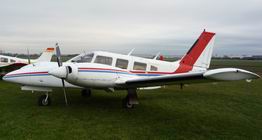
PA34 Seneca is a typical training aeroplane used for the CPL |
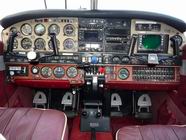
PA34 Seneca instrument panel |
Introduction
The Modular Commercial Pilot's Licence (Aeroplanes) multi-engine flying course is designed for those candidates who do not wish to undertake a full time course of integrated training or who wish to stagger their training by completing approved modules of training over a period of time. Referred to as modular training
Licence Issue Experience Requirements (Part FCL Appendix 3)
The applicant for a CPL(A) shall have completed at least 200 hours flight time, including at least:
(a) 100 hours as PIC, of which 20 hours of cross-country flight as PIC, which shall include a VFR cross-country flight of at least 540 km (300 NM), in the course of which full stop landings at two aerodromes different from the aerodrome of departure shall be made
(b) 5 hours of flight time shall be completed at night, comprising 3 hours of dual instruction, which shall include at least 1 hour of cross-country navigation and 5 solo take-offs and 5 solo full stop landings and
(c) 10 hours of instrument flight instruction, of which up to 5 hours may be instrument ground time in an FNPT I, or FNPT II or FFS. An applicant holding a course completion certificate for the Basic Instrument Flight Module shall be credited with up to 10 hours towards the required instrument instruction time. Hours done in a BITD shall not be credited
(d) 6 hours of flight time shall be completed in a multi-engine aeroplane, if a multi-engine aeroplane is used for the skill test
(e) Hours as PIC of other categories of aircraft may count towards the 200 hours flight time, in the following cases:
(i) 30 hours in helicopter, if the applicant holds a PPL(H) or
(ii) 100 hours in helicopters, if the applicant holds a CPL(H) or
(iii) 30 hours in TMGs or sailplanes or
(iv) 30 hours in airships, if the applicant holds a PPL(As) or
(v) 60 hours in airships, if the applicant holds a CPL(As)
(f) Part Med.A.030 states that a Class 1 medical certificate is required for issue of a CPL (A)
(g) FCL.055 Language proficiency states an aeroplane, helicopter, powered-lift and airship pilots required to use the radio telephone shall not exercise the privileges of their licences and ratings unless they have a language proficiency endorsement on their licence in either English or the language used for radio communications involved in the flight. The Operational Level (Level 4) is the minimum required proficiency level for radiotelephony communication
(h) Have completed an approved CPL (A) theoretical knowledge course comprising at least 250 hours of instruction and passed the theoretical knowledge examinations appropriate to the privileges of the holder of a CPL (A) in accordance with FCL.310 CPL. The theoretical knowledge training shall include UPRT (FCL.315.A CPL)
Pre-Course Entry Requirements (Part FCL Appendix 3)
Before commencing the flight training the applicant shall:
Be the holder of a PPL (A) issued in accordance with Annex 1 to the Chicago Convention
Have completed 150 hours flight time; including 50 hours as PIC on aeroplanes of which 10 hours shall be cross-country. Except for the requirement of 50 hours as PIC in aeroplanes, hours as PIC in other categories of aircraft may account for the 150 hours of aeroplane flight time in any of the following cases:
(1) 20 hours in helicopters, if applicants hold a PPL(H)
(2) 50 hours in helicopters, if applicants hold a CPL(H)
(3) 10 hours in TMGs or sailplanes
(4) 20 hours in airships, if applicants hold a PPL(As)
(5) 50 hours in airships, if applicants hold a CPL(As)
Have complied with the prerequisites for the issue of a class or type rating for multi-engine aeroplanes in accordance with FCL.720.A(a)(1)
An applicant wishing to undertake a modular CPL(A) course shall complete all the flight instructional stages in one continuous course of training as arranged by an ATO
Theoretical Knowledge (Part FCL Appendix 3)
The theoretical knowledge instruction may be given at an ATO conducting theoretical knowledge instruction only. An approved CPL(A) theoretical knowledge course shall comprise at least 250 hours of instruction
Theoretical Knowledge Examinations (Part FCL.320 CPL - Theoretical knowledge examinations)
An applicant for a CPL shall demonstrate a level of knowledge appropriate to the privileges granted in the following subjects:
- Air Law
- Aircraft General Knowledge - Airframe/Systems/Powerplant
- Aircraft General Knowledge - Instrumentation
- Mass and Balance
- Performance
- Flight Planning and Monitoring
- Human Performance
- Meteorology
- General Navigation
- Radio Navigation
- Operational Procedures
- Principles of Flight
- Visual Flight Rules (VFR) Communications
Examination Assessment
A pass in an examination paper will be awarded to an applicant achieving at least 75% of the marks allocated to that paper. There is no penalty marking
An applicant has successfully completed the required theoretical knowledge examination when he/she has passed all the required examination papers within a period of 18 months counted from the end of the calendar month when the applicant first attempted an examination
If an applicant has failed to pass one of the examination papers within 4 attempts or 18 months counted from the end of the calendar month when the applicant first attempted an examination, they shall re-take the complete set of examination papers
Before re-taking the examinations, the applicant shall undertake further training at an ATO. The extent and scope of the training needed shall be determined by the training organisation, based on the needs of the applicant
Flight Training (AMC1 to Appendix 3 Training courses for the issue of a CPL and an ATPL)
Applicants without an IR shall be given at least 25 hours dual flight instruction, including 10 hours of instrument instruction of which up to 5 hours may be instrument ground time in a BITD, an FNPT I or II, an FTD 2 or an FFS and of the 25 hours dual flight instruction, 6 hours shall be completed in a multi-engine aeroplane
Applicants holding a valid IR(A) shall be fully credited towards the dual instrument instruction time. Applicants holding a valid IR(H) shall be credited up to 5 hours of the dual instrument instruction time, in which case at least 5 hours dual instrument instruction time shall be given in an aeroplane. An applicant holding a Course Completion Certificate for the Basic Instrument Flight Module shall be credited with up to 10 hours towards the required instrument instruction time
Applicants with a valid IR shall be given at least 15 hours dual visual flight instruction
Applicants without a night rating aeroplane shall be given additionally at least 5 hours night flight instruction, comprising 3 hours of dual instruction, which shall include at least 1 hour of cross-country navigation and 5 solo take-offs and 5 solo full stop landings
At least 5 hours of the flight instruction shall be carried out in an aeroplane certificated for the carriage of at least 4 persons and have a variable pitch propeller and retractable landing gear
The flying training shall include UPRT (FCL.315.A CPL | AMC2 to Appendix 3; AMC1 to Appendix 5 | GM1 to Appendix 3; Appendix 5)
Theoretical Knowledge Examination - Multi-Engine Aeroplane
Pass a written multi-engine theoretical knowledge examination consisting of 50 multiple choice questions covering aspects of multi-engine operations and aircraft type specific limitations. The pass mark is 75%
CPL (A) Skill Test (FCL.320 CPL - Skill test)
On satisfactory completion of all the related flight training, theoretical knowledge examinations and licence issue experience requirements the candidate can undertake a CPL Skill Test with an FE. The duration of the flight shall be at least 90 minutes. The contents of the Skill Test shall include:
Section 1 Departure
Pre-flight including: Flight planning, Documentation, Mass and Balance determination, Weather brief, NOTAMS
Aeroplane inspection and servicing
Taxiing and take-off
Performance considerations, trim
Aerodrome and traffic pattern operations
Departure procedure, altimeter settings and collision avoidance
ATC liaison – compliance, RTF procedures
Section 2 General Airwork
Control of the aeroplane by external visual reference including straight and level, climb, descent, lookout
Flight at critically low airspeeds including recognition of and recovery from incipient and full stalls
Turns including turns in landing configuration. Steep turns 45 AOB
Flight at critically high airspeeds including recognition of and recovery from spiral dives
Flight by reference solely to instruments including:
# Level flight, cruise configuration, control of heading altitude and airspeed
# Descending and climbing turns with 10-30 AOB
# Recovery from unusual attitudes
# Limited panel instruments
ATC liaison – compliance, RTF procedures
Section 3 En-Route Procedures
Control of the aeroplane by external visual reference including cruise configuration and consideration of range/endurance
Orientation and map reading
Altitude, speed, heading control and lookout
Altimeter setting, ATC liaison – compliance, RTF procedures
Monitoring of flight progress, flight log, fuel usage, assessment of track error and re-establishment of correct tracking
Observations of weather conditions, assessment of trends and diversion planning
Tracking and positioning (NDB or VOR), identification of facilities (instrument flight) and implementation of diversion plan to alternate aerodrome (visual flight)
Section 4 Approach and Landing Procedures
Arrival procedures, altimeter settings, checks and lookout
ATC liaison – compliance, RTF procedures
Go-around action from low height
Normal landing, crosswind landing (if suitable conditions)
Short field landing
Approach and landing with idle power (SE only)
Landing without the use of flaps
Post flight actions
Section 5 Abnormal and Emergency Operation
(This section maybe combined with sections 1 through 4)
Simulated EFATO (at a safe altitude) and fire drill
Equipment malfunctions including:
# Alternative landing gear extension
# Electrical failure
# Brake system failure
Forced landing (simulated)
ATC liaison – compliance, RTF procedures
Oral questions
Section 6 Simulated Asymmetric Flight
(This section maybe combined with sections 1 through 5)
Simulated engine failure during take-off (at a safe altitude unless carried out in a FFS)
Asymmetric approach and go-around
Asymmetric approach and full stop landing
Engine shutdown and restart
ATC liaison – compliance, R/T procedures
As determined by the FE - any relevant items of the class/type rating skill test to include: (if applicable)
# Aeroplane systems including handling of autopilot
# Operation of pressurisation system
# Use of de-icing and anti icing system
Oral questions
Minimum Age
An applicant for a CPL (A) shall be at least 18 years of age
Validity
The CPL (A) is a non-expiring “lifetime” licence. Once issued the licence is held unless it is provisionally suspended, suspended or revoked by the issuing authority or is surrendered by the holder
However, for the licence to be valid for any particular flight the medical certificate and relevant aircraft ratings and certificates must be valid
FCL.305 CPL - Privileges and conditions
(a) Privileges. The privileges of the holder of a CPL are, within the appropriate aircraft category, to:
(1) exercise all the privileges of the holder of an LAPL and a PPL
(2) act as PIC or co-pilot of any aircraft engaged in operations other than commercial air transport
(3) act as PIC in commercial air transport of any single-pilot aircraft subject to the restrictions specified in FCL.060 and in Part FCL Subpart D
(4) act as co-pilot in commercial air transport subject to the restrictions specified in FCL.060
(b) Conditions. An applicant for the issue of a CPL shall have fulfilled the requirements for the class or type rating of the aircraft used in the skill test
Note: The ANO renders the CPL to be a valid licence with the same privileges for non-Part 21 aeroplanes
References
UK CAA Standards Document 3
Air Navigation Order (ANO)
SERA
Part FCL, AMC, GM and Appendicies