


 |
Your training will include both ground and flight training including a supervised solo flight |
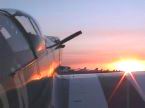 |
Flying at night involves a mixture of visual and instrument flying skills and despite what you may think, night flying is not difficult |
 |
With the short winter days the ability to fly at night certainly makes flying your aeroplane less stressfull and rushed The course is fun and doesn't involve a test at the end! |
General
If the privileges of an UK NPPL, LAPL or PPL are to be exercised under VFR at night the pilot shall hold a night rating
Applicants shall complete a training course within a period of up to 6 months at a DTO or at an ATO
Credits
Applicants for a night rating for aeroplanes or TMGs in accordance with this subparagraph shall receive full credit towards the requirements of Pre-Course Entry Requirements, Flight Training and Theoretical Knowledge Training if they hold a TMG night rating in accordance with point SFCL.210 of Annex III (Part-SFCL) to Regulation 2018/1976 or if they have fulfilled all the requirements for the issue of that rating
Pre-Course Entry Requirements
Before completing the training at night, LAPL holders shall have completed the basic instrument flight training required for the issue of the PPL
Flight Training
The flight training course is given in AMC1 FCL.810(a) and shall comprise at least 5 hours of flight time in the appropriate aircraft category at night, including:
# at least 3 hours of dual instruction, including at least 1 hour of cross-country navigation with at least 1 dual cross-country flight of at least 50 km (27 nm)
# 5 solo take-offs and 5 solo full-stop landings
When applicants hold both a single-engine piston aeroplane (land) and a TMG class rating, they may complete the requirements above in either class or both classes
Theoretical Knowledge Training
The theoretical knowledge syllabus is given in AMC1 FCL.810(a) and should cover the revision or explanation of:
# night VMC minima
# rules about airspace control at night and facilities available
# rules about aerodrome ground, runway, and obstruction lighting
# aircraft navigation lights and collision avoidance rules
# physiological aspects of night vision and orientation
# dangers of disorientation at night
# dangers of weather deterioration at night
# instrument systems or functions and errors
# instrument lighting and emergency cockpit lighting systems
# map marking for use under cockpit lighting
# practical navigation principles
# radio navigation principles
# planning and use of safety altitude
# danger from icing conditions, as well as from avoidance and escape manoeuvres
The training should be integrated with the flight training so that the maximum benefit is gained from time spent in the air
Skill Test
There is no test or examination at the end of the training course
References
AOPA Night Flying Syllabus
Night Flying Manual and Syllabus by R D Campbell
Air Pilots Manual Book 5 by Trevor Thom
CAP 804
Regulation 2018/1139 AMC and GM
Air Navigation Order (ANO)
UK CAA Communication - Safety Directive, Safety Notice, Information Notice, Skywise, AIC
Privileges
To exercise the privileges of an UK NPPL, LAPL or PPL for aeroplanes or TMGs in VFR conditions at night
Carriage of Passengers
A pilot shall not operate an aircraft at night carrying passengers unless the pilot has met the requirements of FCL.060(b)(2)
Revalidation/Renewal
There are no revalidation/renewal requirements