


 |
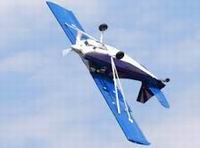
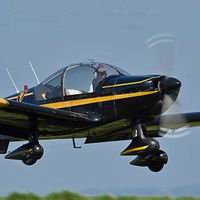
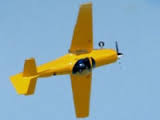
Citarbia, T67 Firefly and Robin 2160 aerobatic aeroplanes are ideal |
 |
Training is conducted by instructors with UPRT experience |
 |
UPRT shall form part of a pilot's flight training course
|
General
There are 2 types of UPRT course; Basic and Advanced (FCL.745.A)
The Basic UPRT forms part of the CPL(A) / ATPL(A) / MPL(A) pilot training courses as detailed in Part FCL, AMC and GM as follows:
AMC2 to Appendix 3, AMC1 to Appendix 5, GM1 Appendix 3, Appendix 5, GM1 to Appendix 3
The Advanced UPRT course is detailed in Part FCL, AMC and GM as follows:
FCL.745.A, AMC1 FCL.745.A, GM1 FCL.745.A
Why complete Advanced UPRT training?
FCL.720.A(b)(5) Experience requirements and prerequisites for the issue of class or type ratings - aeroplanes
Applicants for the issue of the first type rating for a multi-pilot aeroplane shall .... comply with the following requirements:
(5) have completed the training course specified in point FCL.745.A unless they comply with any of the following:
(i) they completed, within the preceding 3 years, the training and checking in accordance with points ORO.FC.220 and ORO.FC.230 of Annex III (Part-ORO) to Regulation 965/2012
(ii) they have completed the training specified in point FCL.915(e)(1)(ii)
Pre-Course Entry Requirements
There are no pre-course entry requirements
Ground Training
Basic UPRT course
5 hours of theoretical knowledge instruction in the following subjects:
* Aerodynamics
* Causes of and contributing factors to upsets
* Safety review of accidents and incidents relating to aeroplane upsets
* G-load awareness and management
* Energy management
* Flight path management
* Recognition
* System malfunction (including immediate handling and subsequent operational considerations, as applicable)
* TEM
* Pilot competencies, including CRM
* Human factors
Advanced UPRT course (FCL.745.A)
* Review of aerodynamics and case studies
* Aerodynamics relevant to the aeroplane used on the flight exercises
* Physiological and psychological effects including surprise and startle
* Strategies to develop resilience and mitigate startle effect
* Procedures and techniques for upset recovery
The theoretical knowledge training shall be integrated with the flight training so that the maximum benefit is gained from time spent in the air
Flight Training
Basic UPRT course
3 hours of dual flight instruction comprising the following exercises:
* Timely and appropriate intervention
* Flight path management
* Application of OEM recommendations (if applicable) during developing upsets
* Stall events in various configurations
Advanced UPRT course (FCL.745.A)
3 hours of dual flight instruction comprising the following exercises:
* Recovery from nose high upsets at various bank angles
* Recovery from nose low upsets at various bank angles
* Recovery from spiral dive
* Recovery from stall event
* Recovery from incipient spin
The flight training shall be integrated with thetheoretical knowledge training so that the maximum benefit is gained from time spent in the air
Course Completion Certificate
On successful completion of the ground and flight training the pilot shall be issued with a course completion certificate
Assessment
Basic UPRT course
There are no flight tests or theoretical knowledge examinations
Advanced UPRT course (FCL.745.A)
The candidate will be continually assessed to ensure the required competency standards are met in accordance with GM1 FCL.745.A(k)
GM1 FCL.745.A(k) - Pilot competencies and behavioural indicators in the context of the Advanced UPRT course
(1) Application of procedures
(i) Follows the recommended Nose High or Nose Low recovery strategy or the Stall Event Recovery Template / Stall Recovery SOP
(ii) Identifies and follows operating instructions in a timely manner
(iii) Correctly operates aircraft systems and equipment
(iv) Applies relevant procedural knowledge
(2) Communication
(i) Adheres to callouts
(ii) Verbalises the essential steps during the recoveries
(3) Aeroplane flight path management - automation
(i) Disconnects autopilot and autothrust/autothrottle before initiating the recovery (to be simulated if the training aeroplane is not fitted with autothrust/autothrottle)
(4) Aeroplane flight path management - manual control
(i) Detects deviations from the desired aircraft trajectory and takes appropriate action
(ii) Controls the aircraft using appropriate attitude and power settings
(iii) Contains the aircraft within the defined flight envelope
(5) Leadership and teamwork
(i) Understands and agrees with the crew’s roles and objectives
(ii) Uses initiative and gives directions when required
(iii) Admits mistakes and takes responsibility
(iv) Communicates relevant concerns and intentions
(v) Gives and receives feedback constructively
(vi) Projects self-control in all situations
(6) Problem-solving and decision-making
(i) Seeks accurate and adequate information from appropriate sources
(ii) Identifies and verifies what and why things have gone wrong
(iii) Perseveres in working through the event safely
(iv) Sets priorities appropriately
(7) Situation awareness and information management
(i) Identifies and assesses accurately the state of the aircraft and its systems
(ii) Identifies and assesses accurately the aircraft’s vertical and lateral position, and its anticipated flight path
(iii) Anticipates accurately what could happen, plans and stays ahead of the situation
(iv) Recognises and effectively responds to indications of reduced situation awareness.
(8) Workload management
(i) Maintains self-control in all situations and manages and recovers from stress response (startle surprise), interruptions, distractions, variations and errors effectively
(ii) Reviews, monitors and cross-checks actions conscientiously
(iii) Verifies that tasks are completed to the expected outcome
(iv) Offers and accepts assistance, delegates when necessary, and asks for help early
(v) Manages and recovers from interruptions, distractions, variations and failures effectively
Validty
There is no validity period for UPRT
Revalidation / Renewal
During a SPA complex or MPA type Proficiency Check or Skill Test the pilot shall be required to demonstrate upset recovery techniques (refer to Appendix 9 of Part FCL)
References
ICAO Doc 10011 Manual on Aeroplane Upset Prevention and Recovery Training First Edition 2014
FAA AC 120-111 Upset Prevention and Recovery Training (free online)
Aircraft Upset Prevention Recovery Training Aid (AUPRTA) (free online)
AP3456 Royal Air Force Manual Flying (volume 1 only - Principles of Flight)
Regulation 2018/1139 AMC and GM
Instructor Manual (Part FCL edition)